Razor vs Epilator vs Wax: 5 Real Differences That Actually Decide Which One Fits You
Quick Answer: Razors are fastest but shortest-lasting (1-3 days); epilators hurt more upfront but last 2-3 weeks and improve with repeated use; wax lasts similarly long with less at-home mess but higher cost if done professionally. The right pick depends on your pain tolerance and how much prep time you actually have.
There’s no universally ‘best’ hair removal method — just the one that fits your actual schedule, skin, and tolerance for discomfort. Here’s how the three real contenders stack up.

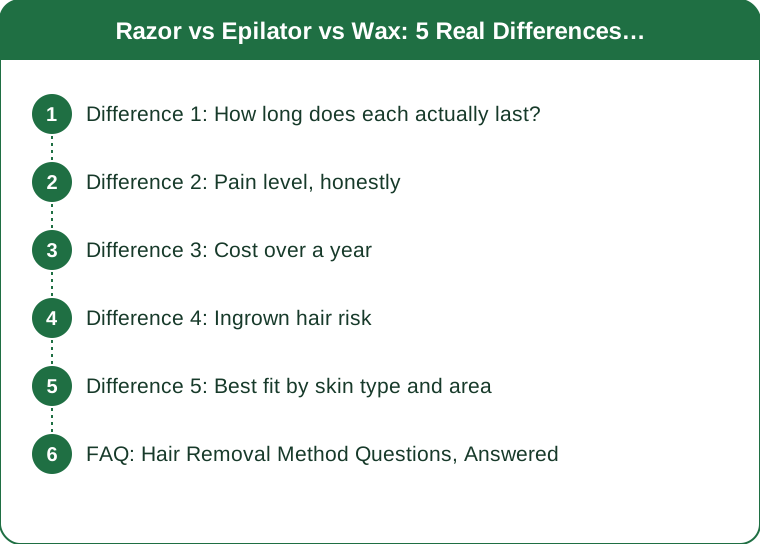
Difference 1: How long does each actually last?
Razor: 1-3 days, since it cuts hair at the surface, leaving the root intact to regrow fast. Epilator and wax: 2-3 weeks, both pulling hair from the root, so regrowth starts from zero rather than a blunt surface cut.
If convenience between sessions matters most, epilator or wax wins clearly; if you want zero commitment and don’t mind frequent upkeep, razor stays the simplest option.
Difference 2: Pain level, honestly
Razor: essentially painless when done correctly. Epilator: noticeable pinching pain, especially the first few uses — most people report it becoming meaningfully more tolerable after 3-4 sessions as skin adjusts. Wax: sharp but brief pain per strip, generally rated similar to or slightly less than epilator pain by most users, but concentrated in quick bursts rather than continuous.
Difference 3: Cost over a year
Razor: cheapest upfront (a few dollars), but blades add up with frequent replacement — moderate ongoing cost. Epilator: higher upfront cost (one device), then essentially free per session going forward — cheapest long-term. Wax: cheapest if done at home with kits, but professional waxing adds up fast, often the most expensive option long-term.

Difference 4: Ingrown hair risk
Razor carries the highest ingrown hair risk, especially with dull blades or fast strokes against the grain. Epilator and wax both pull from the root, which somewhat reduces (but doesn’t eliminate) ingrowns compared to razors — though initial sessions with either can trigger a temporary ingrown flare as skin adjusts to root removal.
Difference 5: Best fit by skin type and area
Sensitive skin: often tolerates a good razor better than the trauma of epilating or waxing, at least initially. Larger areas (legs): razor is fastest for time-pressed mornings; wax often wins for the smoothest finish over big areas. Smaller precision areas (eyebrows, upper lip): wax or epilator both outperform razor, which struggles with detail work.
FAQ: Hair Removal Method Questions, Answered
Can you switch between methods without issues?
Yes, though switching from razor to root-removal methods (wax/epilator) often takes a few cycles for skin and hair growth pattern to adjust.
Does epilating get less painful over time?
Most users report a real, noticeable drop in discomfort after the first 3-4 sessions, as hair thins and skin adapts — first-timers should expect the worst experience to be the very first one.
Is wax or epilator better for reducing hair thickness over time?
Both can lead to finer regrowth over months of consistent root removal, though results vary by individual and hair type — neither permanently stops growth.
TL;DR:
- Razor: fastest, least painful, shortest-lasting (1-3 days), higher ingrown risk
- Epilator: more upfront pain that eases with use, 2-3 week results, cheapest long-term
- Wax: similar duration to epilator, smoothest for large areas, pricier if done professionally
- Pick based on your actual pain tolerance and schedule, not which sounds most ‘advanced’
Keep Reading
This article is for general informational and styling purposes only. Fit, sizing, and product availability may vary.