5 Hair Removal Decisions That Depend on What You Wore That Day
Quick Answer: What you wear in the 24 hours after hair removal decides a large share of whether you get irritation. Tight technical fabric traps heat and moisture against freshly exposed follicles; loose natural fibres let the skin settle. Five specific clothing situations change what method and what timing make sense, and adjusting for them costs nothing.
The method gets the blame. The leggings did it.
This is general information, not medical advice.

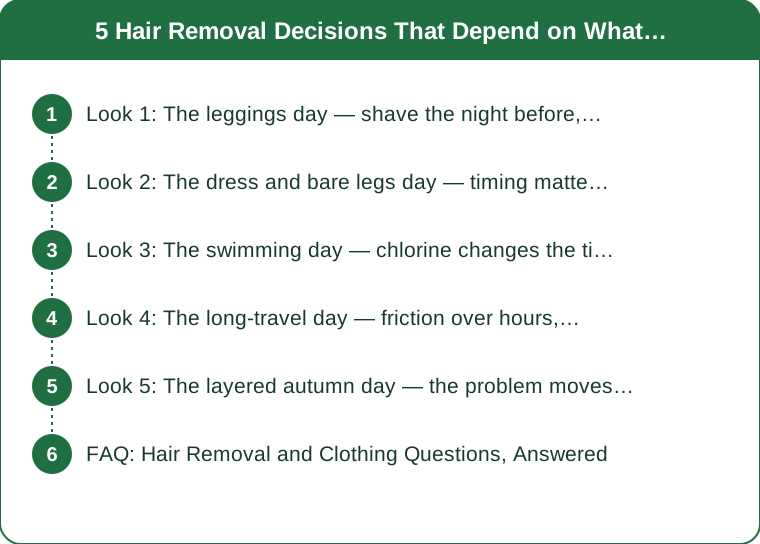
Look 1: The leggings day — shave the night before, not the morning
Compression plus friction is the worst combination for freshly shaved skin. A waistband or a legging seam moving across skin whose follicles were opened hours earlier is the standard route to bumps along the bikini line and inner thigh.
Twelve hours makes a measurable difference. Shaving the night before lets the skin close and calm before it spends a day under tension. The same razor, the same technique, a different result.
If it has to be the morning, change the direction. Shaving with the grain rather than against it produces a slightly less close result and substantially less irritation under tight fabric.
Skip the heavy scented moisturiser on a day you will be in compression wear. Fragrance plus occlusion plus sweat is a reliable irritation recipe.
And rinse afterwards. Sitting in the same leggings for a post-gym coffee is where most of the damage happens, not during the session itself.
Look 2: The dress and bare legs day — timing matters more than closeness
Bare legs mean visible results, so people over-shave. Repeated passes over the same area is the single biggest cause of razor burn, and it does not produce a meaningfully closer result after the second pass.
Two passes maximum, then stop. With the grain first, across the grain second if needed. Against the grain is where ingrowns come from.
Shave at the end of a shower, not the start. Five minutes of warm water softens the hair and swells the follicle, which makes a single pass considerably more effective.
Give it an hour before sun exposure. Freshly shaved skin has had its top layer partially removed and burns more readily, which is a real consideration on the last warm days of the year.
Sunscreen goes on after the skin has settled, not immediately, and a mineral formula tends to sting less on freshly shaved legs than a chemical one.
Look 3: The swimming day — chlorine changes the timeline
Do not shave immediately before swimming. Chlorinated water on skin with open follicles stings, dries, and increases irritation risk substantially.
Aim for 12 to 24 hours of separation between hair removal and pool time, in either direction.
Shaving after swimming is the better order if you have to choose, but rinse the chlorine off thoroughly first — shaving over chlorine residue drags the blade and irritates.
Salt water is gentler than chlorine but not neutral. Sea swimming a few hours after shaving is usually fine; a chlorinated pool is not.
Waxing needs a longer gap. Most therapists recommend a full 24 to 48 hours before pool or hot tub, because the follicle stays open longer than after shaving.

Look 4: The long-travel day — friction over hours, not minutes
Seated travel means sustained pressure in exactly the places that irritate. A flight or a long drive the day after bikini-line hair removal is a genuinely bad combination.
Shave or wax two days before travel, not the night before. This is the single most useful adjustment on this list for anyone who travels regularly.
Choose the fabric deliberately. Cotton underwear and loose trousers for the journey, technical fabric saved for arrival.
Bring a light barrier balm. A thin layer over the area before a long journey reduces friction meaningfully and is easier than managing the aftermath.
Hydration matters more than it sounds. Cabin air is very dry, skin barrier function drops, and freshly treated skin reacts more.
Look 5: The layered autumn day — the problem moves to the legs
As tights and lined trousers come back, the friction site changes. Summer irritation clusters at the bikini line; autumn irritation clusters on the shins and the back of the thighs where fabric grips.
Hair removal frequency can drop considerably. Covered legs need far less maintenance, and the reduced frequency itself reduces cumulative irritation.
Dry air is the new variable. Once heating comes on, skin dries out, and dry skin drags a blade. Moisturising the night before a shave becomes more important than it was in July.
Exfoliation frequency should fall, not rise. Cold-weather skin is already compromised; aggressive scrubbing on top of that produces the ingrowns people blame on the tights.
Switch to a longer-lasting method if the maintenance annoys you. With legs covered most days, the visible-result pressure drops and waxing or an epilator becomes far more tolerable than it is in summer.
FAQ: Hair Removal and Clothing Questions, Answered
How long should I wait before wearing tight clothing?
Roughly 12 hours after shaving and 24 to 48 hours after waxing is the general guidance. Loose natural fibres in the interim.
Does underwear fabric really matter?
For the bikini line, yes, noticeably. Cotton breathes and technical synthetics trap moisture; the difference shows up as bumps within a day or two.
Is it better to shave less often?
For many people with recurrent irritation, yes. Extending the interval lets the skin recover, and the perceived need for daily smoothness is usually higher than the situation requires.
TL;DR:
- Shave the night before a leggings day, not the morning of it.
- Two passes maximum, with the grain, at the end of a warm shower.
- Keep 12 to 24 hours between hair removal and chlorinated water.
- Shift hair removal two days before long travel and wear cotton for the journey.
- As layers return, cut frequency and exfoliation, and moisturise the night before.
The method is rarely the problem. What you put on afterwards usually is.
This is general information, not medical advice.
See It in Motion
Seen here: Super High Waist Embossed Yoga Leggings with Inner Pocket — shop it on bubblelime.com
Keep Reading
This article is for general informational and styling purposes only. Fit, sizing, and product availability may vary.