5 Signs You're Using the Wrong Hair Removal Method
Quick Answer: Ingrown hairs after shaving mainly come from cutting hair at an angle that leaves a sharp edge trapped under the skin surface — exfoliating regularly and shaving in the direction of hair growth with a sharp, single-pass razor prevents most cases.
Same razor, same routine, same result: small red bumps a day or two later. Ingrown hairs feel random, but they trace back to a small number of specific, fixable causes.

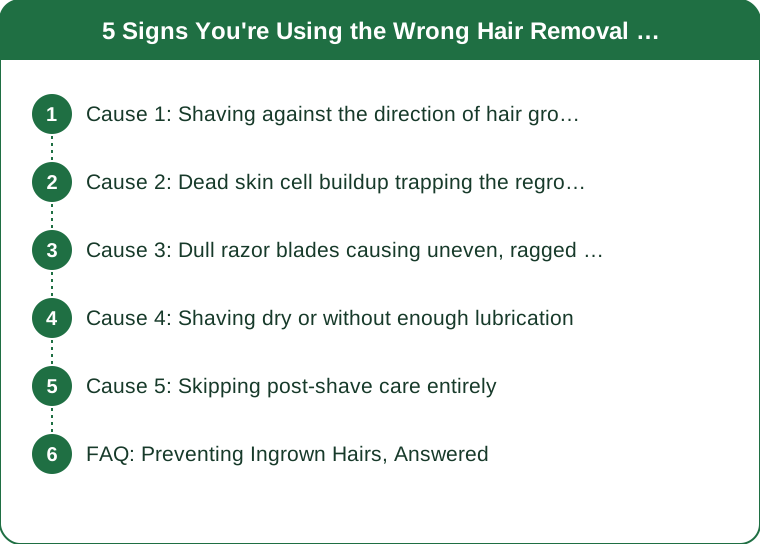
Cause 1: Shaving against the direction of hair growth
Shaving against the grain cuts hair at a sharper, more angled edge that’s more likely to curl back and pierce the surrounding skin as it regrows. Shaving with the grain, even if it means a slightly less close shave, significantly reduces this risk.
Cause 2: Dead skin cell buildup trapping the regrowing hair
Without regular exfoliation, dead skin cells accumulate over the follicle opening, physically blocking the path a new hair needs to grow straight out. The hair curls back under the trapped skin layer instead, which is one of the most common and most preventable causes.
Cause 3: Dull razor blades causing uneven, ragged cuts
A dull blade doesn’t cut hair cleanly — it drags and tears, leaving a jagged edge that’s both more irritating to skin and more prone to curling back into the follicle. Replacing blades every 5-7 shaves (sooner for coarser hair) keeps cuts clean.

Cause 4: Shaving dry or without enough lubrication
Dry shaving increases friction and irritation, both of which contribute to ingrown hair risk beyond just the cut itself. A proper shaving cream or gel, plus fully hydrated skin (post-shower is ideal), reduces this friction significantly.
Cause 5: Skipping post-shave care entirely
Skin right after shaving is more vulnerable to bacteria and clogged pores during the healing window. A gentle, alcohol-free after-shave product with soothing ingredients (aloe, witch hazel) supports the skin through this window better than doing nothing.

FAQ: Preventing Ingrown Hairs, Answered
How often should exfoliation happen to meaningfully reduce ingrown hairs?
2-3 times weekly with a gentle physical or chemical exfoliant is generally enough — more frequent exfoliation can actually irritate skin and worsen the problem.
Do ingrown hairs from shaving eventually resolve on their own?
Many do resolve within 1-2 weeks without intervention; persistent or infected-looking ones may need gentle extraction or a dermatologist’s input.
Is switching hair removal methods (like waxing) a real fix for chronic ingrown hairs?
It can help for some people, since different methods cut or remove hair differently, but the prevention steps above often resolve shaving-specific ingrown hairs without switching methods entirely.
TL;DR:
- Shaving against the grain is the single biggest contributor to ingrown hairs
- Regular exfoliation (2-3x weekly) prevents dead skin from trapping regrowing hair
- Fresh, sharp blades cut cleanly and reduce the jagged edges that cause curling
- Proper lubrication and post-shave care round out a routine that prevents most cases
Ingrown hairs aren’t bad luck — they trace back to a specific step in the routine, and each one has a direct fix.
Keep Reading
This article is for general informational and styling purposes only. Fit, sizing, and product availability may vary.