Why the Same Hair Removal Method Works for Your Friend but Wrecks Your Skin
Recommendations for hair removal methods pass around freely between friends, but skin reactions to the same method can be wildly different from one person to the next. The mismatch isn’t random — it tracks with specific skin traits that are worth checking before adopting someone else’s routine.

Why Reactions Vary So Much
The individual factors: the the-skin-barrier-strength-variance (differences in baseline skin barrier strength meaning the same waxing or chemical depilatory session can cause significant irritation in one person and none in another), the the-hair-follicle-density-factor (higher hair follicle density in certain areas increasing irritation risk for methods like waxing or epilating, regardless of general skin sensitivity elsewhere), the the-product-formulation-differences (different brands within the same method category — like chemical depilatories — varying enough in formulation that a bad reaction to one product doesn’t mean the whole method is off-limits).

Matching Method to Sensitivity
The general guidance: the the-shaving-lowest-risk (shaving carrying the lowest irritation risk for most sensitive skin, at the cost of the shortest regrowth interval among common methods), the the-waxing-sugaring-tradeoff (sugaring generally causing less irritation than traditional waxing for sensitive skin, since it adheres less to live skin cells, though individual results still vary), the the-chemical-depilatory-caution (chemical depilatories carrying the highest risk of a true allergic or chemical burn reaction, making a patch test especially important before full application).
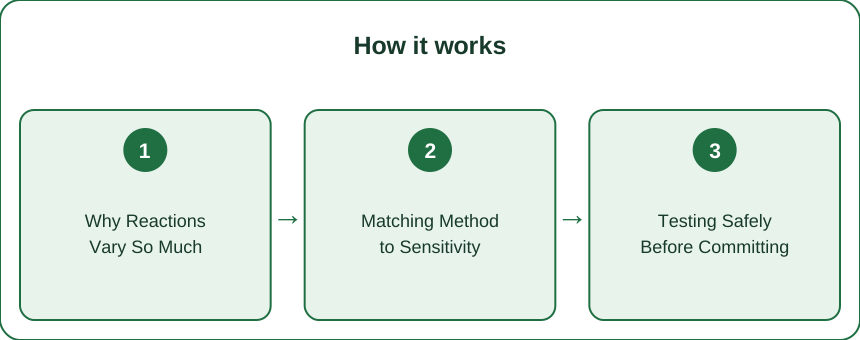
Testing Safely Before Committing
The practical test: the the-patch-test-first-rule (a 24 to 48 hour patch test on a small area being the standard safety check before using any new method or product on a larger area, regardless of how a friend’s skin handled it), the the-avoid-freshly-exfoliated-skin (avoiding hair removal on recently exfoliated or already-irritated skin, since barrier function is temporarily weaker and reaction risk goes up), and the frame (a friend’s good experience with a method says nothing about your own skin barrier or follicle density, so patch-test every new method independently)). This is general information, not medical advice.
A hair removal method that works perfectly for a friend can genuinely wreck someone else’s skin, and it’s not random — differences in baseline skin barrier strength, hair follicle density in a given area, and even formulation differences between brands of the same method type all affect how a given approach performs on a specific person. As a general pattern, shaving carries the lowest irritation risk but the shortest regrowth interval, sugaring tends to be gentler than traditional waxing since it adheres less to live skin cells, and chemical depilatories carry the highest risk of a true allergic or burn reaction. None of that replaces an actual patch test — 24 to 48 hours on a small area before committing to a new method on a larger one, especially avoiding already-irritated or freshly exfoliated skin where barrier function is temporarily weaker. Why the Same Hair Removal Method Works for Your Friend but Wrecks Your Skin comes down to skin traits a friend’s experience can’t tell you about. This is general information, not medical advice.
Keep Reading
This article is for general informational and styling purposes only. Fit, sizing, and product availability may vary.