5 Ways Sweat Changes Hair Removal Results
Quick Answer: Sweat interacts with hair removal in five distinct ways - it irritates freshly opened follicles, it softens skin in a way that changes shaving results, it worsens ingrowns through friction and occlusion, it degrades self-tan and post-treatment products, and it changes the timing window around laser and waxing. The general rule is to leave 24 hours between hair removal and heavy training in either direction, and to shower promptly afterwards. Each interaction below has a specific fix.
You did nothing different and the results are worse.
The difference is what happened in the twelve hours either side.
This is general information, not medical advice.
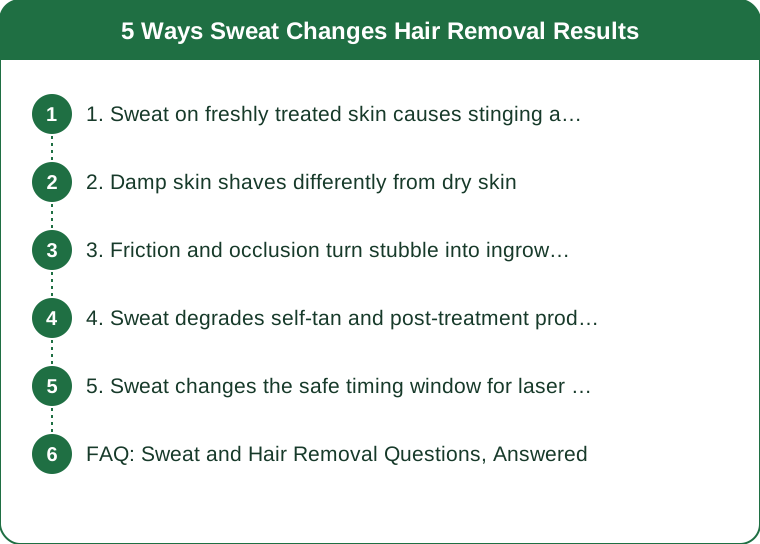
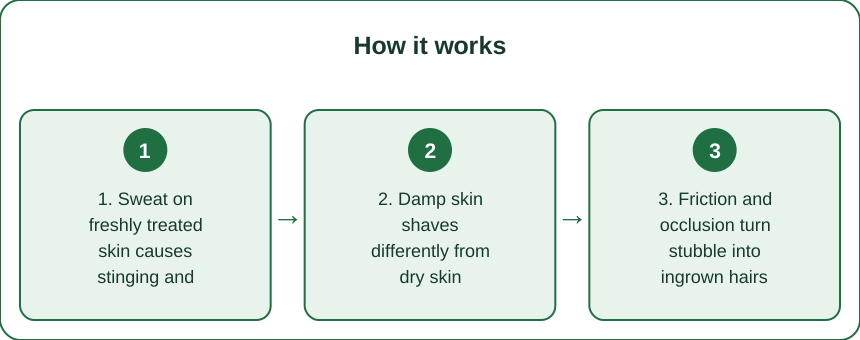
1. Sweat on freshly treated skin causes stinging and bumps
What happens: Shaving, waxing and epilating all leave follicles open and the skin barrier temporarily disrupted. Sweat is mildly salty and slightly acidic, and it stings on that surface. More importantly, the warm moist environment plus bacteria from skin and equipment is exactly what causes folliculitis - the small red bumps that appear a day after a workout on freshly shaved legs.
Why the timing matters so much: the follicle opening takes roughly 24 hours to close properly after hair removal. That is the window where bacteria can enter easily, and training in the middle of it puts sweat, friction and gym-surface bacteria into an open follicle.
The fix: remove hair after training, not before. This one change solves more problems than anything else on this list. If you must do it beforehand, leave a minimum of 12 hours and preferably 24, and shower with a gentle cleanser rather than only rinsing after your session.
What to apply afterwards: nothing occlusive immediately. A thin layer of a soothing gel - aloe or centella - is better than a rich cream in the first hours, since heavy products trap heat and can block the follicles you just opened. Move to a proper moisturiser once the skin has settled.
And avoid heat entirely for a few hours. Sauna, steam room and hot showers all dilate vessels and increase irritation on skin that is already reactive.
2. Damp skin shaves differently from dry skin
What happens: Water softens the hair shaft substantially - a properly hydrated hair can be around 30% easier to cut. This is why shaving in a warm shower after a few minutes gives a closer result than shaving on dry skin.
Sweat does something related and not identical. It hydrates the surface, but it also leaves salt behind as it evaporates, and salt on the skin surface increases razor drag. Shaving over sweaty unwashed skin gives a rougher shave and more irritation than shaving after a proper wash.
The other half is the skin itself. Over-hydrated skin from a very long shower swells slightly, which can cause the razor to cut hair below the skin surface. When the skin returns to normal, the hair tip sits below the surface - which is a direct route to ingrown hairs.
The fix: shave after three to five minutes of warm water, not fifteen. Long enough to soften the hair, not long enough to waterlog the skin.
Sequence that works:
- Wash the area with a gentle cleanser first - removes salt, oil and gym-floor bacteria
- Three to five minutes of warm water
- A proper shaving product, not soap or conditioner, which do not provide the same glide
- A sharp blade, light pressure, with the grain first
- Cool rinse and pat dry, then a fragrance-free moisturiser
On blade life: a blade used on freshly sweaty skin dulls faster because salt promotes corrosion. Rinse blades thoroughly and dry them after use, and replace them more often in summer.
3. Friction and occlusion turn stubble into ingrown hairs
What happens: Ingrown hairs form when a hair curls back into the skin or is trapped under the surface. Two things make that far more likely: friction, and the skin being covered by a layer of dead cells.
Training kit provides both. Tight leggings, sports bra bands and waistbands press against the skin and rub with every movement, which pushes emerging hairs sideways rather than letting them exit cleanly. Sweat trapped under synthetic fabric softens and swells the outer skin layer, which makes it harder for a fine hair to break through.
Where it shows up: bikini line, inner thighs, underarms and the back of the neck - precisely the areas under the most fabric pressure.
The fix, in three parts:
- Change out of training kit promptly. Sitting in damp leggings for two hours after a session is the single biggest contributor to bikini line ingrowns in anyone who trains regularly
- Exfoliate, gently and regularly. A chemical exfoliant with salicylic or glycolic acid two or three times a week removes the dead cell layer without the friction of a scrub. Physical scrubs on an area that is already irritated by friction make it worse
- Choose looser kit for the days after hair removal, and prefer flat seams over thick ones at the waistband and leg opening
What not to do: do not dig at an ingrown hair with tweezers. It causes scarring and post-inflammatory pigmentation, both of which last far longer than the ingrown would have. Warm compress, gentle exfoliation, and patience.
If an area becomes painful, swollen or produces pus, that is an infection rather than an ingrown and is worth having looked at.

4. Sweat degrades self-tan and post-treatment products
What happens: Self-tan develops over 4 to 8 hours as the active reacts with proteins in the outer skin layer. Sweating during that window disrupts the reaction unevenly, producing streaks and patches - and it is the most common cause of a bad self-tan result.
After development, sweat accelerates fading. The colour lives in the outer layer of skin that is constantly shedding, and sweat plus friction plus frequent showering speeds that shedding up. A tan that lasts seven days on a sedentary week can last four on a heavy training week.
The same applies to post-hair-removal products. Ingrown-prevention lotions, soothing serums and any active applied to the skin are diluted and washed away by sweat, so applying one before a session largely wastes it.
The timing that works:
- Hair removal, then 24 hours, then self-tan - tanning over freshly shaved or waxed skin causes dark spots at open follicles
- Self-tan, then 8 hours minimum with no training, ideally overnight
- Apply treatment products after showering post-training, not before
- A rest day is the right day for both, which sounds obvious and is rarely planned for
On fading unevenly: the areas that sweat most - underarms, backs of knees, inner thighs - fade fastest, which is why tans often go patchy in exactly those spots. A light exfoliation before reapplying evens it out rather than adding colour over an uneven base.
And a practical note: deodorant and antiperspirant strip self-tan from the underarm area quickly, which is normal and not worth fighting.
5. Sweat changes the safe timing window for laser and waxing
What happens: Both treatments leave the skin in a reactive state for a period afterwards, and heat and sweat during that window increase the risk of irritation, folliculitis and, for laser, pigmentation changes.
For laser and IPL specifically, the standard guidance is to avoid heat and heavy exercise for 24 to 48 hours after treatment. The skin has absorbed energy and is warm and inflamed at the follicle level. Adding heat and sweat can extend the inflammation and, on sun-exposed or deeper skin tones, contributes to post-inflammatory pigmentation.
For waxing, the window is shorter - typically 24 hours - and the risks are folliculitis and irritation rather than pigmentation.
What the guidance usually covers:
- No heavy exercise for 24 to 48 hours after laser, 24 after waxing
- No sauna, steam room, hot tub or very hot showers in the same window
- No swimming pools, since chlorine on compromised skin is irritating and pools carry bacteria
- No sun exposure on treated skin, which matters most for laser
- Loose clothing, for the friction reasons above
Plan the week around it rather than the other way round. Book laser after your hardest session, not before, and take the treatment day as a rest or light day. A Friday evening appointment with an easy weekend is the standard solution.
Always follow the specific aftercare your practitioner gives you - protocols differ by device, setting and skin type, and general guidance does not override professional advice for your treatment.
And if treated skin becomes increasingly red, hot, swollen or blistered rather than settling, contact the clinic. That is not the normal course and it needs assessing rather than waiting out.
FAQ: Sweat and Hair Removal Questions, Answered
Should I shave before or after a workout?
After, essentially always. Follicles take around 24 hours to close after shaving, and training in that window puts sweat, friction and gym bacteria into open follicles. Shaving after a session with a proper wash first solves most irritation problems.
How long should I wait to exercise after waxing?
Around 24 hours, and avoid saunas, steam rooms, hot tubs and swimming in the same window. The skin is reactive and follicles are open, which is the combination that produces folliculitis.
And after laser or IPL?
Usually 24 to 48 hours with no heavy exercise, heat or sun, but follow the specific aftercare your practitioner gives you - protocols vary by device and skin type. Booking after your hardest session rather than before makes this straightforward.
Why do I get more ingrown hairs when I train?
Friction from tight kit pushes emerging hairs sideways, and sweat trapped under synthetic fabric softens and swells the outer skin layer so hairs cannot break through. Changing out of damp kit promptly is the single biggest fix.
Why does my self-tan go patchy in a training week?
Sweating during the 4 to 8 hour development window disrupts the reaction unevenly, and afterwards sweat and friction accelerate the shedding of the coloured outer skin layer. Apply it on a rest day, ideally overnight.
Should I use a scrub for ingrowns?
A gentle chemical exfoliant with salicylic or glycolic acid two or three times a week is better. Physical scrubs add friction to skin that is already irritated by friction from clothing, which tends to make ingrowns worse rather than better.
TL;DR:
- Remove hair after training, not before - follicles take about 24 hours to close
- Shave after three to five minutes of warm water, not fifteen; over-hydrated skin causes ingrowns
- Wash before shaving to remove salt, which increases razor drag and dulls blades faster
- Change out of damp kit promptly - trapped sweat and friction are the main ingrown drivers
- Chemical exfoliation two or three times a week beats scrubs on friction-irritated skin
- Self-tan needs 8 hours sweat-free to develop, and 24 hours after hair removal before applying
- Laser wants 24 to 48 hours without heat or exercise; book it after your hardest session
Most of this is one rule with five applications: put 24 hours between the two things.
See It in Motion
Seen here: High Waist Yoga Leggings with Side Pockets — shop it on bubblelime.com
Keep Reading
This article is for general informational and styling purposes only. Fit, sizing, and product availability may vary.