5 Things That Change About Hair Removal Once the Weather Cools
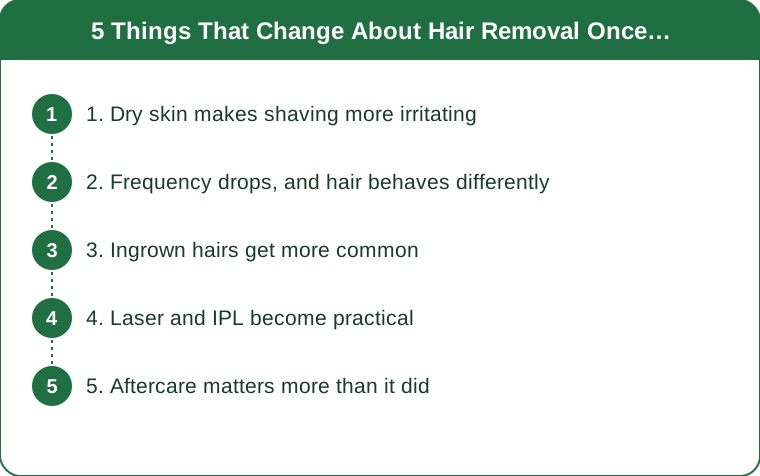
Quick Answer: Five things change: skin gets drier so shaving irritates more, hair removal frequency naturally drops with more coverage, ingrown hairs become more common under tighter autumn clothing, laser and IPL become more practical because sun exposure falls, and post-treatment skin needs more aftercare in dry heated air. The single most useful adjustment is moisturising far more consistently than you did in summer.
Nobody sits down in September and decides to change their hair removal routine. It just changes - less often, more irritation, more ingrowns - and then feels like a problem rather than a predictable seasonal shift.

1. Dry skin makes shaving more irritating
What changes. Indoor heating lowers humidity, the skin barrier is under more stress, and a razor drawn across compromised skin causes considerably more irritation than the same razor on well-hydrated summer skin.
Why it matters. Razor burn, stinging, and small red bumps are far more common in autumn and winter, and they are usually attributed to the razor being blunt when the actual variable is skin condition.
What to do. Shave at the end of a shower rather than the beginning, when hair has softened and skin is hydrated - the difference is genuinely noticeable. Use a proper shaving product rather than soap or shower gel, which strip further. Replace blades more often than feels necessary, since a dull blade requires more pressure and more passes.
And moisturise immediately afterwards, on damp skin, with something richer than you used in summer. Fragrance-free is generally better on freshly shaved skin, which has effectively been mildly exfoliated.
Shave in the direction of hair growth if irritation is the main problem. It gives a slightly less close result and a substantially more comfortable one, which in a dry season is usually the better trade.
One thing to check: very hot showers strip surface lipids efficiently, and a hot shower followed by shaving is a reliable route to irritation. Warm rather than hot helps more than any product.
2. Frequency drops, and hair behaves differently
What changes. More coverage means less visible hair, and most people naturally extend the gap between sessions - from every couple of days to weekly or less.
Why it matters. Longer hair is easier to remove by waxing and epilation, which both work better on hair of a certain length, so autumn is actually a good time to switch methods if you have been considering it. But longer hair also means shaving takes more passes when you do it, which increases irritation.
The useful reframe: less frequent removal is not neglect, it is a legitimate seasonal adjustment. There is nothing about hair that requires attention on a summer schedule when nobody, including you, is looking at it.
If you are waxing, the length rule matters. Wax generally needs hair around a quarter of an inch - roughly the length reached after two to three weeks of growth. Attempting it too short is the main reason home waxing fails and hurts.
Autumn is the standard time to start a hair-removal method that requires growing out, because the growing-out period is invisible under autumn clothing. This is the practical reason so many people start waxing or epilating in September.
And if you shave less often, change the blade on time anyway. Blade life is about exposure and corrosion as much as use, and a razor sitting in a damp bathroom for three weeks between uses is not in good condition when you pick it up.

3. Ingrown hairs get more common
What changes. Tighter, heavier autumn clothing - leggings, jeans, thicker tights - creates more friction and occlusion, and drier skin means more dead cells sitting on the surface. Both contribute to hairs becoming trapped as they grow.
Why it matters. Ingrown hairs are uncomfortable, look like breakouts, and can become inflamed. They are one of the most common autumn skin complaints and they are largely preventable.
What to do. Exfoliate gently and regularly - a chemical exfoliant such as a body lotion containing salicylic or glycolic acid is generally more effective and less irritating than a physical scrub, particularly on already-dry skin.
Moisturise consistently. Well-hydrated skin sheds surface cells more effectively, which is the actual mechanism by which moisturising reduces ingrowns.
Loosen the clothing where you can, at least at home. Constant tight friction over a shaved or waxed area is a direct contributor.
Do not pick or dig at them. It causes inflammation, scarring, and sometimes infection. A warm compress and patience is the boring correct answer, and most resolve on their own.
And consider the removal direction and method. Shaving very close, particularly against the grain, increases the chance of a hair retracting below the surface and growing back into the skin. If you get ingrowns persistently, shaving with the grain or switching methods often helps more than any product.
If an area becomes hot, painful, or swollen, that may be an infected follicle and is worth seeing a pharmacist or GP about rather than treating at home.
4. Laser and IPL become practical
What changes. Light-based hair removal generally requires avoiding sun exposure before and after treatment, because tanned or recently sun-exposed skin carries a higher risk of adverse effects. Autumn and winter remove that constraint for most people.
Why it matters. Courses typically require multiple sessions spaced over months, and starting in autumn means completing a course through the low-sun months.
What to know before starting. Effectiveness depends on the contrast between hair and skin pigment; it works best on dark hair, and results on very light, red, or grey hair are limited because there is little pigment for the light to target. A consultation should cover this honestly.
It is not permanent removal for most people - the usual accurate term is permanent reduction, with maintenance sessions often needed. Anyone promising complete permanent removal is overstating it.
Shaving between sessions is generally required, while waxing and epilating are not, because the treatment targets the hair root and removing it defeats the purpose.
Home IPL devices exist and are less powerful than clinical treatment, which means more sessions for less dramatic results, though many people find them worthwhile. Follow the device instructions on skin tone suitability carefully - they exist for safety reasons.
Choose a practitioner properly. Regulation varies by region, and this is a treatment where practitioner training genuinely matters. Ask about qualifications, patch testing, and what happens if there is an adverse reaction.
Speak to a qualified practitioner about suitability for your skin and hair type, and about any medications or conditions that may affect treatment. This is general information, not medical advice.
5. Aftercare matters more than it did
What changes. Skin that has just been shaved, waxed, or epilated has been mildly traumatised, and in dry heated air it recovers more slowly than it did in humid summer conditions.
Why it matters. The redness, bumps, and sensitivity that settled within an hour in July can persist noticeably longer in October, and repeated inadequate recovery leads to ongoing irritation rather than an isolated episode.
What to do immediately after. Avoid heat for a few hours - hot showers, saunas, and intense exercise all increase irritation on freshly treated skin. Wear something loose over the area rather than immediately putting on tight clothing.
Moisturise, but choose carefully. Fragrance-free and simple is better on freshly treated skin. Heavy occlusive products immediately after waxing can contribute to blocked follicles, so lightweight and hydrating first, richer products the following day.
Skip the exfoliation for a day or two afterwards, then resume regularly. Exfoliating immediately after removal irritates skin that is already compromised.
Sun protection still applies to exposed areas, particularly after waxing, which removes some surface skin cells along with the hair.
And build in more recovery time between sessions if irritation is persistent. A slightly longer gap allows skin to recover fully, and consistently irritated skin never gets the chance.
Quick FAQ
Should I shave before or after moisturising? Shave first, then moisturise on damp skin immediately afterwards.
Is it better to shave at night or in the morning? At night, if irritation is a problem - skin recovers overnight without immediately meeting tight clothing.
Why do I get more razor bumps in winter? Drier skin, more friction from heavier clothing, and hotter showers stripping the barrier. All three are addressable, and moisturising consistently addresses most of it.
TL;DR:
- Dry skin makes shaving irritate more - shave at the end of a warm shower and moisturise on damp skin.
- Longer gaps between sessions are fine, and autumn is the natural time to start a method that needs growing out.
- Ingrowns rise with tighter clothing and drier skin; gentle chemical exfoliation and moisture prevent most of them.
- Laser and IPL become practical when sun exposure drops - and it is reduction, not permanent removal.
- Aftercare matters more now: no heat for a few hours, loose clothing, fragrance-free moisture, exfoliate a day or two later.
Nobody decides to change their routine in September. It changes anyway - the only question is whether you adjust deliberately or spend the season slightly irritated.
Keep Reading
This article is for general informational and styling purposes only. Fit, sizing, and product availability may vary.