5 Razor Storage Habits That Decide How Long a Blade Lasts
Quick Answer: A razor blade dulls far less from cutting hair than from oxidation and micro-corrosion of the edge between uses. Water left on the blade, humid shower air, and contact with a wet surface all accelerate it. Change where and how you store it and a cartridge that gave you 5 or 6 comfortable shaves commonly gives 10 to 15. The five habits below cover almost the entire difference.
Most people replace blades on a schedule and assume that is just what blades cost. It usually is not.

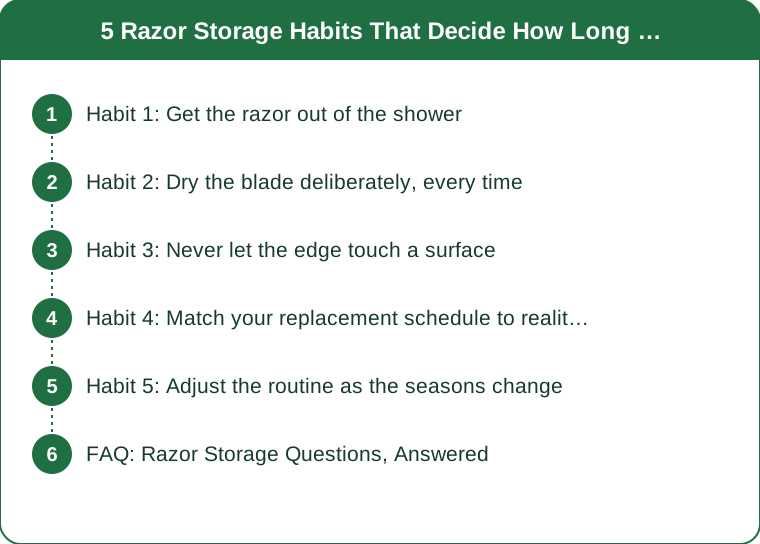
Habit 1: Get the razor out of the shower
This is the single highest-value change, and it is free.
A shower is a corrosion chamber. Warm, humid, and rarely fully dry between uses. A blade stored there sits in high humidity for hours a day, and steel edges are astonishingly thin - a razor edge is measured in fractions of a micron, so even microscopic corrosion changes how it cuts.
The edge does not go blunt so much as it goes rough. Corrosion creates microscopic pitting along the cutting edge. That pitting is what produces the tug, the drag, and the razor burn people interpret as a dull blade.
Store it outside the bathroom if you can. A drawer in a bedroom or a hallway cupboard is genuinely better than any bathroom shelf. If it must live in the bathroom, choose the driest, most ventilated spot - a cabinet, not the shower caddy.
Run the extractor fan or open a window. Reducing overall bathroom humidity helps every blade you own, plus the mirror and the grout.
Expected difference: people who move a razor out of the shower and change nothing else routinely report roughly double the comfortable shaves per cartridge. It is the cheapest upgrade in a bathroom.
Habit 2: Dry the blade deliberately, every time
Rinsing is not drying, and the distinction matters more than it sounds.
Water droplets sitting on the edge are where corrosion starts. Tap water contains dissolved minerals, and as a droplet evaporates it concentrates them right on the cutting edge.
Shake, then blot. After the final rinse, shake the razor firmly, then blot it on a dry towel - blade-first is wrong, so blot by pressing the head sideways or patting the top. Never wipe along the edge; that both dulls the blade and shreds the towel.
A hair dryer on cool for 10 seconds is the enthusiast version and it works. Overkill for most people, but it does explain why some people get months out of a cartridge.
Rinse with the hottest water available first. Hot water helps clear hair and shaving cream out from between the blades, and the residual heat speeds evaporation. Debris trapped between blades holds moisture against the edge and is a common hidden cause of early dulling.
A short soak in rubbing alcohol after drying displaces remaining water and evaporates completely. It is optional, but it is the closest thing to a magic trick here.
Habit 3: Never let the edge touch a surface
Physical contact damage is real and completely avoidable.
A razor left flat on the edge of a sink is resting on its cutting edge. Steel that thin deforms against ceramic, and one knock is enough to leave a section that drags.
Store it head-up or hanging. A simple hook, a stand, or a cup that holds it upright keeps the edge clear of everything. Razor stands exist for a reason and cost very little.
Use the plastic cap it came with if you are traveling, but only on a fully dry blade. A cap on a wet blade is the worst of both worlds - it traps moisture directly against the edge and turns a protective habit into a destructive one.
Do not store it loose in a washbag. Loose in a bag, the head knocks against everything, and washbags are usually damp. A hard travel case on a dry razor is the correct combination.
Watch out for shared surfaces. A razor lying in a shower tray gets kicked, knocked, and rinsed with everyone else’s water - and picks up bacteria along the way, which matters for skin as well as for the blade.

Habit 4: Match your replacement schedule to reality, not the box
The number on the packaging is a sales figure, not a measurement.
Judge by feel, not by count. A blade needs replacing when you notice tug, drag, more passes to get the same result, or irritation that was not there before. Those symptoms arrive at wildly different times depending on storage, hair coarseness, and how much surface area you shave.
Larger areas wear blades faster. Legs use far more blade life per shave than underarms, so someone shaving full legs twice a week and someone shaving a bikini line will not share a schedule.
Shaving less often is harder on the blade, not easier. Longer hair clogs the cartridge and demands more passes, which is why the first shave after a two-week gap feels rough.
Prep reduces blade wear. Softening hair with a few minutes of warm water and using a proper shaving cream rather than soap means less resistance per stroke and a blade that keeps its edge longer. Soap is the enemy here - it dries skin and leaves residue in the cartridge.
Write the date on the handle with a marker if you shave irregularly. Not for the schedule, but so that you can connect a bad shave to a blade that has been sitting damp for three weeks.
Habit 5: Adjust the routine as the seasons change
Late summer into autumn changes both your skin and your bathroom.
Shaving frequency drops as legs get covered. Longer gaps mean longer hair, more clogging, and more passes. Trim first if it has been more than about ten days, and the blade will last considerably longer.
Skin gets drier as heating starts. Dry skin plus a slightly worn blade is the standard recipe for autumn razor burn. Shave at the end of a shower when skin is softened, use a cream rather than gel if you are dry, and moisturize within a couple of minutes.
Bathroom humidity rises in cold months. Windows stay shut, showers get hotter, and rooms take longer to dry. That is worse for blade storage, not better - so this is the season to move the razor out of the bathroom if you have not already.
Blades left unused for weeks still corrode. If you shave less over autumn and winter, storing a razor properly matters more, not less. A dry drawer beats a shower caddy by a wide margin over a two-month gap.
And swap to a fresh blade before events, not after a run of stretched-out shaves. Most of the irritation people associate with hair removal comes from asking a tired blade to do a job it can no longer do comfortably.

FAQ: Razor Storage Questions, Answered
Does drying a razor really double blade life?
For most people, moving the razor somewhere dry and blotting it after each use produces the biggest single improvement - often roughly doubling the number of comfortable shaves. Results vary with water hardness and bathroom ventilation.
Do razor sharpeners or denim stropping work?
Stropping on denim or a similar surface can realign a slightly deformed edge and buy a few extra shaves. It does not restore a corroded or pitted edge, so it works best as a supplement to good storage rather than a substitute.
Should I keep a razor in the fridge or freezer?
No. Condensation forms when the blade returns to room temperature, which puts water right back on the edge. Dry and room temperature is the goal.
How often should I replace a blade if I shave twice a week?
With good storage, roughly every three to five weeks is common for leg shaving. Replace sooner if you notice drag, irritation, or needing extra passes - and never share a razor, which is a hygiene issue independent of blade life.
TL;DR:
- Blades dull mostly from corrosion between shaves, not from cutting hair.
- Get the razor out of the shower - the highest-value change, and free.
- Blot it dry after every use, store it head-up so the edge touches nothing, and never cap a wet blade.
- Replace by feel (tug, drag, extra passes), trim before long-gap shaves, and expect autumn humidity to make storage matter more.
The reason this is worth five minutes of attention is the cost per shave: the same cartridge doing 12 comfortable shaves instead of 5 changes the annual bill significantly, and it removes most of the irritation that people assume is just what shaving feels like.
Keep Reading
This article is for general informational and styling purposes only. Fit, sizing, and product availability may vary.