5 Ingrown Hair Hotspots and What Each One Needs
Quick Answer: An ingrown hair happens when a hair cannot exit the follicle, either because the opening is blocked by dead skin or because the hair curls back into the skin. Which of those dominates depends on the body area - friction and coarse curl drive bikini line ingrowns, while dry skin and dull blades drive leg ones.
Match the fix to the location and most of them stop recurring.

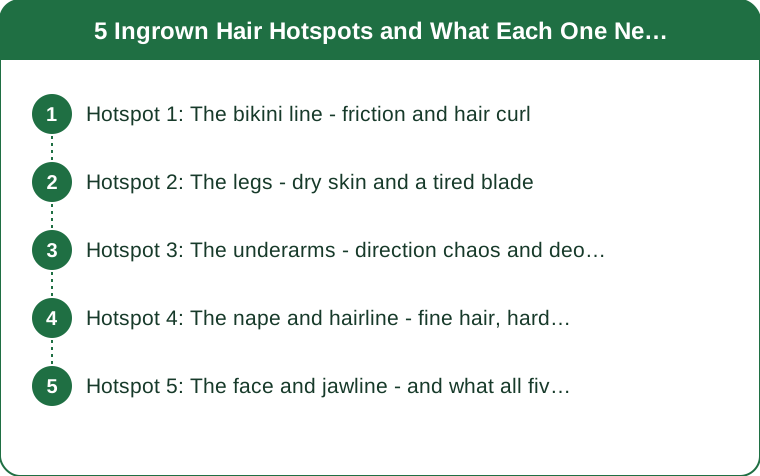
Hotspot 1: The bikini line - friction and hair curl
The most stubborn area by a distance, and the one where general advice helps least.
Why it happens here: three factors combine. Hair in this area is naturally coarser and more curved than leg hair, so it is far more likely to re-enter the skin after cutting. The skin is thinner and more sensitive, so inflammation escalates faster. And it is under near-constant friction and occlusion from underwear, leggings, and swimwear - friction pushes cut hairs sideways and occlusion keeps the area warm and damp, which softens the skin surface and makes penetration easier.
Curly and coarse hair types are more prone to ingrowns everywhere, and the bikini line is where that is most pronounced for most people.
What this area specifically needs:
- Do not shave against the grain here, even though it gives a closer result. Cutting the hair below the skin surface is precisely what allows it to grow back into the follicle wall.
- Reduce friction after hair removal. Loose cotton underwear for 24 hours, and no leggings, tight swimwear, or seamed workout wear on the day. This is the highest-impact change and the one people skip.
- Wait before training. Sweat plus friction on freshly removed hair is the worst combination available. A gap of a day between hair removal and a workout dramatically reduces problems.
- Consider a longer trim instead of full removal. Many people find that trimming rather than shaving eliminates bikini ingrowns entirely, because the hair is never cut short enough to become trapped.
- Exfoliate gently and between sessions, never immediately after. A chemical exfoliant with salicylic or glycolic acid, used a couple of times a week on non-removal days, keeps the follicle openings clear without the mechanical irritation of scrubbing.
What to avoid: scrubs immediately after removal, tight clothing, and picking. Picking at a bikini ingrown is how a minor bump becomes an infection and a lasting dark mark.
Hotspot 2: The legs - dry skin and a tired blade
The most common location and the easiest to fix, because the causes are mechanical rather than anatomical.
Why it happens here: leg hair is usually straighter and less prone to curling back, so genuine curl-in ingrowns are less common. What causes leg bumps is mostly blocked follicles - dead skin accumulating over the opening so the emerging hair cannot break through. Legs are also the largest area, so people use a single blade across a lot of surface and it dulls fast.
A dull blade is a distinct problem from a sharp one: it tugs rather than cuts cleanly, leaving a ragged hair end that is more likely to catch, and it drags across skin causing microtrauma and inflammation around the follicle.
Season matters too. Autumn and winter legs are drier, which means more dead skin buildup and more blocked follicles, at exactly the time when legs are covered and moisturized less often.
What this area specifically needs:
- Change the blade more often than you do. Most people use a cartridge far past its useful life. Five to seven shaves is a realistic limit, fewer if you are shaving a large area or if the hair is coarse.
- Exfoliate regularly, not aggressively. Legs tolerate more exfoliation than the bikini line. A chemical exfoliant two or three times a week, or a gentle physical scrub, keeps follicles clear. This is the single most effective leg intervention.
- Moisturize daily, not just after shaving. Dry skin is thicker and flakier at the surface, which is what blocks follicles. Consistent moisturizing changes the underlying condition.
- Shave at the end of a shower, when the hair has been softened by several minutes of warm water. Softer hair cuts more cleanly with less pressure.
- Use less pressure. Pressing hard does not shave closer; it just increases irritation. Let the blade do the work.
Leg ingrowns respond well and fast to these changes - usually within a couple of weeks.
Hotspot 3: The underarms - direction chaos and deodorant
The area where technique fails most often, because the hair does not grow in one direction.
Why it happens here: underarm hair grows in multiple, conflicting directions across a small curved area, which makes with-the-grain shaving genuinely difficult - what is with the grain in one spot is against it an inch away. Add skin that folds and moves, constant friction from arm movement, and a warm occluded environment, and the conditions are similar to the bikini line at smaller scale.
The area-specific factor is product. Deodorants and antiperspirants are applied directly to freshly shaved skin, and antiperspirant works by temporarily blocking sweat ducts - which is not the same as blocking hair follicles, but the combination of an occlusive product on freshly irritated skin does contribute to bumps for many people.
What this area specifically needs:
- Map the growth direction. Genuinely - look, in good light, and notice that it changes across the area. Shave each section in its own direction rather than making one long stroke across all of them.
- Stretch the skin. Raising the arm fully and using the other hand to pull the skin taut gives the blade a flat surface. Shaving over folded skin is where nicks and irritation happen.
- Skip the antiperspirant right after. Wait until the next morning if you can, or use a plain deodorant on shave days. Fragrance and alcohol on freshly shaved skin sting for a reason.
- Shave at night rather than in the morning, so skin has hours to settle before product goes on.
- Rinse thoroughly. Product residue combined with dead skin is a common cause of underarm bumps that people attribute to shaving alone.
A note on persistent underarm bumps that do not respond: some are not ingrowns at all but blocked sweat glands or a follicular condition. Bumps that are painful, deep, recurring in the same spots, or draining need a doctor rather than a technique change. This is general information, not medical advice.
Hotspot 4: The nape and hairline - fine hair, hard angles
The area most people do not think about until they get a bump they cannot explain.
Why it happens here: the nape and the edges of the hairline get trimmed or shaved during haircuts, and the hair here is often fine and grows at a very shallow angle to the skin. A shallow-angle hair cut short is well positioned to grow sideways into the skin rather than out of it.
The area is also under friction from collars, scarves, hair itself, and the strap of a bag - and in autumn, from every knit and every coat collar. It is warm, often covered by hair, and rarely exfoliated or moisturized as part of any routine.
What this area specifically needs:
- Include it in your skincare. The nape is skin, and almost nobody moisturizes it. A basic lotion after showering makes a real difference.
- Watch the collar friction. Rough wool directly against a freshly trimmed nape is a reliable way to get bumps. A silk scarf as a layer, or a smoother collar, helps.
- Do not shave it yourself blind. Trimming the nape with a razor you cannot see is how uneven cuts and shallow-angle stubble happen. Let a professional do it, or use a trimmer with a guard rather than a blade.
- Keep long hair off it after a trim. Hair lying against freshly cut skin adds friction and traps moisture.
This one is worth flagging because it is often misidentified as acne or a reaction to a product, and treated with drying spot treatments that make an already-irritated follicle worse.

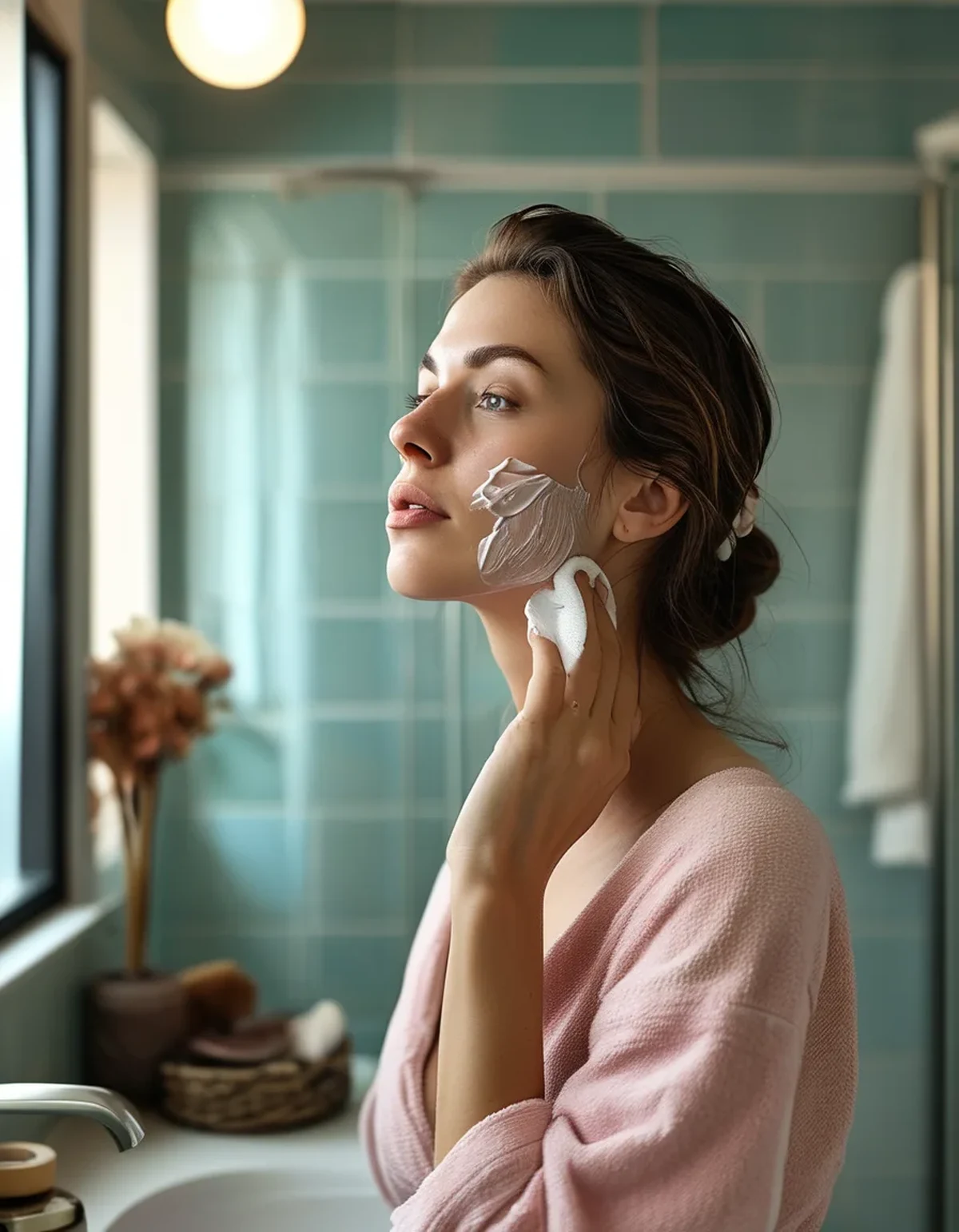
Hotspot 5: The face and jawline - and what all five have in common
Facial ingrowns behave differently because the skin is thinner, more visible, and already carrying a skincare routine that may be working against you.
Why it happens here: any facial hair removal - waxing, threading, dermaplaning, epilating - disrupts the follicle and can leave hair growing back at an altered angle. Facial skin also produces more oil, so blocked follicles are common, and it is the one area where you are actively applying multiple products daily.
The product interaction is the specific issue. Heavy occlusive moisturizers, makeup, and sunscreen all sit over follicle openings, and applied straight after hair removal on a disrupted follicle they can contribute to blockage.
What this area specifically needs:
- Nothing occlusive for 24 hours after hair removal. Skip heavy creams and makeup on the treated area.
- Use the exfoliant you already own, at the right time. Most people doing facial hair removal already have a salicylic or glycolic product. Use it on non-removal days, not the same day.
- Do not tweeze recurring facial ingrowns. Repeated tweezing at the same follicle distorts it and makes future ingrowns more likely, plus facial marks last longer than anywhere else.
What all five have in common - the universal rules that apply regardless of area:
- Exfoliate between hair removal sessions, never immediately after. Timing is what separates helpful from harmful.
- Never pick or dig at an ingrown. It converts an ingrown into an infection and a mark that outlasts it by months.
- A warm compress is the correct first response. Several minutes, a few times a day. Many ingrowns release on their own.
- Reduce friction for 24 hours after removal, everywhere.
- If it is deep, painful, spreading, or recurring in the same spot, see a doctor. Recurrent ingrowns in one location can indicate something that needs proper treatment, and permanent removal methods like laser are worth discussing if the pattern persists. This is general information, not medical advice.
TL;DR:
- Bikini line ingrowns are driven by coarse curl plus friction - shave with the grain, wear loose cotton for a day, and leave a gap before training.
- Leg ingrowns are mostly blocked follicles from dry skin and dull blades - change the blade every five to seven shaves and exfoliate two or three times a week.
- Underarms fail because hair grows in conflicting directions - map it, stretch the skin, shave at night, and skip antiperspirant immediately after.
- The nape is skin nobody moisturizes, under constant collar friction - include it in your routine and do not shave it blind.
- Universal rules: exfoliate between sessions not after, warm compress rather than picking, reduce friction for 24 hours.
Match the fix to the location. The reason ingrowns keep coming back is usually that one area is getting another area’s advice. This is general information, not medical advice.
See It in Motion
Seen here: Super High Waist Embossed Yoga Leggings with Inner Pocket — shop it on bubblelime.com
Keep Reading
This article is for general informational and styling purposes only. Fit, sizing, and product availability may vary.